Teaching Interviews: What to Expect in UK Schools
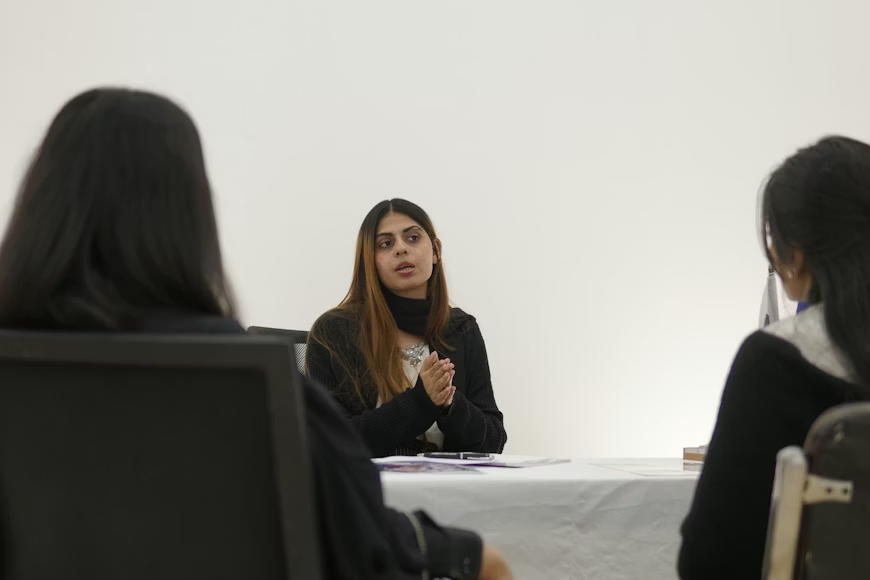
Securing a teaching interview is an exciting milestone in your career journey, but the process can feel daunting if you don’t know what to expect. Unlike standard job interviews, teaching interviews in UK schools involve multiple components designed to assess both your subject knowledge and your practical teaching ability.
UK teaching interviews typically last 2-4 hours and include a taught lesson observation (10-30 minutes), formal panel interview with senior staff, school tour, and often additional tasks such as meeting students, reviewing pupils’ work, or completing in-tray exercises.
This comprehensive guide explains exactly what happens during teaching interviews in UK schools, how to prepare effectively, and what headteachers and interview panels genuinely look for when hiring teachers.
What Is a Teaching Interview Like in the UK?
Teaching interviews are significantly more involved than typical job interviews because schools need to see you teach, not just hear about your experience.
Key characteristics of UK teaching interviews:
- Time-intensive – Expect to spend half a day or full day at the school
- Multi-component – Combines practical teaching with formal questioning
- Observed teaching – You’ll deliver an actual lesson to real students
- Multiple assessors – Several staff members observe and question you
- Holistic assessment – Schools evaluate teaching ability, personality fit, and values alignment
- Often competitive – You may be interviewed alongside other candidates
The process aims to answer three fundamental questions: Can you teach effectively? Will you fit our school culture? Do you share our educational values?
The Teaching Interview Format: What to Expect
Most UK teaching interviews follow a structured format, though specific elements vary by school.
Stage 1 – Initial Screening (Phone or Video)
Many schools conduct preliminary screenings before inviting candidates to formal interviews.
Typical format:
- 15-30 minute call or video interview
- Conducted by headteacher, deputy head, or HR
- Questions about availability, expectations, and basic suitability
- Opportunity to ask initial questions about the role
Purpose: To shortlist candidates before investing time in full interview days.
Not all schools use this stage—some invite applications directly to formal interviews.
Stage 2 – Formal Interview Day
This is the main teaching interview experience.
Typical schedule (2-4 hours):
9:00am – Arrival, welcome, and briefing 9:15am – School tour and introduction to facilities 9:45am – Taught lesson observation (you teach a class) 10:30am – Debrief or break 11:00am – Formal panel interview 11:45am – Additional task (e.g., meeting students, reviewing work) 12:15pm – Questions to the panel and closing
Afternoon – Panel deliberation and decision (you may wait or be called later)
Some schools inform candidates of outcomes the same day; others contact you within 24-48 hours.
Single-Stage vs Multi-Stage Interviews
Single-stage interviews include everything in one visit—tour, lesson, panel interview, and decision.
Multi-stage interviews (less common) involve:
- First visit: Informal meeting, tour, brief discussion
- Second visit: Full formal interview with lesson observation
Leadership positions (Head of Department, Assistant Head) almost always use multi-stage processes.
Typical Teaching Interview Timeline and Duration
Understanding the time commitment helps you plan effectively.
Before the interview:
- 1-2 weeks’ notice for the interview date (occasionally shorter)
- Lesson brief provided 3-7 days in advance (sometimes earlier)
- Preparation time varies—expect 2-5 hours for lesson planning
Interview day:
- Half-day interviews: 2-3 hours (common for primary schools)
- Full-day interviews: 3-5 hours (typical for secondary and leadership roles)
- Start times: Usually 8:30am-10:00am
- Same-day decisions: Some schools decide immediately; others contact you within 48 hours
Post-interview:
- Verbal offer: Often made same day by phone
- Written confirmation: Follows within 1-3 days
- References and checks: DBS and safeguarding checks take 2-6 weeks
- Notice period: Start dates depend on your current commitments (typically term-end transitions)
Key Components of UK Teaching Interviews
The Lesson Observation (Teaching a Sample Lesson)
This is the most distinctive element of teaching interviews and often carries the most weight.
What you’ll be asked to do:
Teach an actual lesson to a real class for 10-30 minutes (20 minutes is most common). You’ll receive a brief specifying:
- Year group (e.g., Year 4, Year 9)
- Class size and ability level
- Topic or learning objective (sometimes you choose within parameters)
- Duration (exact timing expectations)
- Resources available (whiteboard, IT equipment, etc.)
Who observes:
Usually 2-4 observers, typically including:
- Headteacher or deputy head
- Head of department (secondary schools)
- Another senior teacher
- Sometimes a governor
What they’re assessing:
- Subject knowledge and accuracy
- Lesson structure and pacing
- Behaviour management and classroom presence
- Engagement strategies and differentiation
- Rapport with students
- Clear explanations and questioning techniques
- Use of assessment for learning
- Professionalism and confidence
Immediately after your lesson:
Some schools conduct a brief “lesson debrief” where you reflect on what went well and what you’d improve. This tests your self-awareness and reflective practice.
The Formal Panel Interview
This resembles traditional job interviews but focuses on education-specific competencies.
Typical format:
- Duration: 30-45 minutes
- Panel size: 2-5 people (headteacher, senior leaders, governors)
- Question types: Mix of competency-based, scenario-based, and values-based questions
- Your questions: Opportunity at the end to ask questions
Common question themes:
- Why this school specifically?
- Your teaching philosophy and approach to learning
- Behaviour management strategies
- Differentiation and meeting diverse needs
- Safeguarding awareness
- Contribution beyond the classroom (clubs, trips, pastoral care)
- Handling challenging situations
- Professional development and career aspirations
See the dedicated section below for specific example questions.
School Tour and Meeting Staff
Almost all teaching interviews include a guided tour.
What to expect:
- Duration: 15-30 minutes
- Guide: Often a senior teacher or staff member
- Route: Classrooms, staff areas, facilities, outdoor spaces
Why it matters:
Tours help you assess whether the school suits you. Observe:
- Classroom environments and displays
- Student behaviour in corridors
- Staff interactions and atmosphere
- Resources and facilities quality
- Overall “feel” of the school
Professional tip: Ask questions during the tour. Engaging guides with thoughtful questions demonstrates genuine interest.
Meeting Students Informally
Some schools arrange brief interactions with students outside formal teaching.
Typical scenarios:
- Student panel: Answer questions from a small group of pupils
- Lunch with students: Eat in the dining hall and chat informally
- Playground duty observation: Supervise break time briefly
What schools assess:
- Your rapport and communication style with young people
- Whether students respond positively to you
- Your ability to engage appropriately across contexts
Be authentic: Students sense insincerity immediately. Be friendly, respectful, and show genuine interest in their school experience.
Additional Activities and Tasks
Many schools include supplementary assessments.
Common additional tasks:
- Reviewing pupils’ work – Assess samples and provide feedback
- In-tray exercise – Handle hypothetical scenarios (emails, parent concerns, safeguarding issues)
- Presentation – Deliver a short talk on an educational topic
- Written task – Complete a brief safeguarding or policy-related assignment
- Data analysis – Review pupil progress data and suggest interventions
- Meet with parents – Occasional for senior roles
Not every interview includes these, but be prepared for the possibility.
What Questions Are Asked in Teaching Interviews?
Panel interviews focus on educational competencies, values, and scenarios.
Typical teaching interview questions:
About you and the role:
- Why do you want to work at this school specifically?
- What attracted you to teaching? / Why did you become a teacher?
- Where do you see your teaching career in five years?
- What makes an outstanding teacher?
Teaching practice and pedagogy:
- Describe your teaching style and approach to learning
- How do you differentiate for learners of different abilities?
- How do you use assessment to improve learning?
- What strategies do you use for behaviour management?
- How do you make your subject engaging and relevant?
Scenario-based questions:
- A student consistently disrupts your lesson. What do you do?
- A parent complains their child isn’t being challenged. How do you respond?
- You notice a safeguarding concern. What’s your immediate action?
- A colleague criticises your teaching approach. How do you handle it?
School contribution and ethos:
- How would you contribute to the school beyond your teaching role?
- What extra-curricular activities could you offer?
- How do you promote British Values in your teaching?
- Describe your approach to pastoral care and student wellbeing
Safeguarding (mandatory):
- What would you do if a student disclosed abuse to you?
- How do you maintain professional boundaries with students?
- What is your understanding of the Prevent duty?
Subject-specific questions (secondary):
- How do you bring [subject] to life for reluctant learners?
- What current developments in [subject] excite you?
- How do you address common misconceptions in [subject]?
Primary-specific questions:
- How do you teach early reading using phonics?
- Describe your approach to teaching maths for mastery
- How do you manage teaching across multiple subjects?
Use the STAR method (Situation, Task, Action, Result) for competency questions, providing specific examples from your experience.
The Teaching Lesson Observation: What Schools Expect
Your observed lesson is typically the most heavily weighted component.
What makes an excellent interview lesson:
Clear structure:
- Strong starter that hooks students immediately
- Explicit learning objective shared with students
- Logical progression through main activities
- Effective plenary that checks understanding
Excellent behaviour management:
- Clear expectations established from the start
- Positive reinforcement used effectively
- Smooth transitions between activities
- Calm, confident presence
Engaging delivery:
- Enthusiastic and passionate about the subject
- Clear explanations using appropriate language
- Good questioning that checks understanding
- Student participation and active learning
Appropriate challenge:
- Suitable difficulty level for the year group
- Differentiation visible (support for some, extension for others)
- All students making progress during the lesson
Professional presentation:
- Well-prepared resources
- Good use of available technology or visuals
- Respectful rapport with students
- Smart, professional appearance
How to Prepare Your Interview Lesson
1. Read the brief carefully Note the exact year group, ability level, topic, duration, and available resources.
2. Research the school’s context Check Ofsted reports, school website, and policies to align with their approach.
3. Plan meticulously Create a detailed lesson plan including timings, activities, resources, and differentiation strategies.
4. Keep it simple Don’t overcomplicate with too many activities or ambitious technology. Delivery matters more than flashy resources.
5. Build in flexibility Have extension activities ready if students work quickly, and be prepared to adapt if technology fails.
6. Practice your lesson Rehearse timings and explanations aloud. Consider recording yourself.
7. Prepare all resources in advance Print handouts, create slides, gather materials. Bring backups on USB drives and paper copies.
8. Plan for the unknown You won’t know the students’ names or precise ability levels. Use flexible grouping and be ready to adjust.
Common Lesson Observation Mistakes
Avoid these pitfalls:
- Running over or under time – Manage pacing carefully; finishing significantly early or late looks poorly planned
- Teacher-dominated lessons – Too much teacher talk with minimal student participation
- Unclear objectives – Students (and observers) should know what they’re learning and why
- Ignoring behaviour – Failing to address low-level disruption or unclear expectations
- Overly ambitious plans – Trying to fit too much in; depth beats breadth
- No differentiation – Treating all students identically regardless of ability
- Technology failures – Over-relying on technology without backups
- Weak questioning – Only asking closed questions or not allowing thinking time
- No assessment – Failing to check if students understood the content
- Disorganisation – Fumbling with resources, losing timings, appearing flustered
Remember: A simple, well-executed lesson beats an ambitious, chaotic one every time.
Who Conducts Teaching Interviews in UK Schools?
Understanding who assesses you helps you prepare appropriately.
Typical interview panel composition:
Primary schools:
- Headteacher (always)
- Deputy head or assistant head
- Key Stage leader or subject coordinator (for the relevant area)
- School governor (often, especially for permanent roles)
Secondary schools:
- Headteacher or deputy head (senior oversight)
- Head of department (your direct line manager)
- Another senior teacher or assistant head
- Governor (particularly for senior or permanent positions)
Panel sizes: Usually 2-4 people, occasionally 5 for leadership roles.
For your lesson observation: The same panel members typically observe, though sometimes additional staff (e.g., subject specialists) join specifically for the teaching component.
Support staff involvement: Occasionally, teaching assistants or learning support staff participate, especially for SEND-focused roles.
What to Bring to Your Teaching Interview
Essential items:
- Lesson plan – Multiple copies for observers (4-5 copies)
- All lesson resources – Handouts, worksheets, visual aids (printed and on USB)
- Backup copies – Digital resources on multiple devices/formats
- Your CV and application – Refresh your memory before arrival
- Notepad and pen – For taking notes during the tour and jotting questions
- Portfolio (optional) – Examples of students’ work, lesson plans, projects (don’t overwhelm, but can reference if helpful)
- References list – Though schools typically contact referees directly
- Professional documents – QTS certificate, teaching qualifications (originals or certified copies)
- Questions prepared – Thoughtful questions to ask the panel
Practical items:
- Water bottle (interviews are long)
- Mints or breath freshener
- Tissues
- Phone (on silent!)
- Directions and school contact number
Don’t bring:
- Strong-smelling food for breaks
- Excessive personal belongings
- Unprofessional bags or accessories
What to Wear to a Teaching Interview in the UK
Dress professionally and appropriately for a school environment.
Recommended interview attire:
For men:
- Business or smart casual: Suit and tie, or smart trousers with shirt and tie
- Shoes: Polished formal shoes (you’ll be walking around)
- Colours: Navy, grey, black, or neutral tones
- Avoid: Jeans, trainers, overly casual clothing
For women:
- Business or smart casual: Suit, smart trousers/skirt with blouse, or professional dress
- Shoes: Smart, comfortable shoes (low heels or flats—remember the tour and lesson)
- Colours: Professional, neutral, or muted tones
- Avoid: Very short skirts, excessive jewellery, casual wear
General guidelines:
- Err on the side of formal – You can never be overdressed for a teaching interview
- Comfort matters – You’ll be moving, standing, and teaching; choose comfortable clothing
- Conservative styling – Schools are professional environments; avoid anything too trendy or revealing
- Clean and pressed – First impressions matter; ensure clothing is immaculate
- Minimal accessories – Simple jewellery, subtle makeup, neutral nail polish
- Hair neat – Tidy, professional hairstyle
Special considerations:
- Primary teachers might dress slightly less formally than secondary (but still professional)
- If teaching PE or practical subjects, you may be asked to bring appropriate clothing for your lesson
- Some faith schools may have specific dress expectations
How Teaching Interviews Differ by School Type
Primary vs Secondary School Interviews
Primary school interviews typically involve:
- Shorter lesson observations (10-20 minutes)
- Teaching across subjects (often literacy or numeracy)
- Greater emphasis on pastoral care and whole-child development
- More intimate interview settings (smaller panels)
- Focus on relationship-building with young children
Secondary school interviews typically involve:
- Longer lesson observations (20-30 minutes)
- Subject-specialist teaching and knowledge
- Behaviour management with older students
- Larger interview panels including heads of department
- Focus on subject passion and exam results
Academy vs Local Authority School Interviews
Academy interviews:
- May emphasise alignment with academy chain values
- Sometimes involve trust executives as well as school leaders
- Potentially more corporate or structured interview processes
- Focus on data and measurable outcomes
Local Authority (LA) maintained school interviews:
- Often follow traditional local authority procedures
- Strong governor involvement
- Emphasis on community links and local context
- Sometimes more flexible or personalised processes
Differences are often subtle—both prioritise teaching quality and school fit.
Independent School Interviews
Key differences:
- Often longer, more elaborate interview days (sometimes full day or multiple visits)
- May include meeting with bursar or board members
- Greater emphasis on extra-curricular contributions
- Potentially more formal, traditional atmosphere
- Stronger focus on parent relationships and fee-paying customer service
- Sometimes includes social elements (lunch with staff, evening events)
Red Flags to Watch for During Teaching Interviews
While you’re being assessed, assess the school too. Watch for warning signs:
During your visit:
- Poor student behaviour – Chaos in corridors, disrespect to staff, unsafe environments
- Staff appearing stressed or unhappy – Low morale, lack of enthusiasm, negative comments
- High staff turnover – If many roles are vacant or recently filled
- Outdated or poor facilities – Though resources vary, consistent neglect suggests underinvestment
- Vague or evasive answers – If questions about workload, support, or behaviour are dodged
- Unrealistic expectations – Excessive demands beyond teaching (huge extra-curricular commitments with no recognition)
- Safeguarding concerns – Any signs that safeguarding isn’t taken seriously
Questions that reveal red flags:
- “What’s the staff retention rate?” (High turnover suggests problems)
- “How does the school support work-life balance?” (Defensive responses are concerning)
- “What’s your behaviour policy like in practice?” (Dismissive answers suggest issues)
Trust your instincts. If something feels wrong during the interview, it’s worth serious consideration before accepting an offer.
Questions to Ask at Your Teaching Interview
Always prepare thoughtful questions. It demonstrates engagement and helps you make informed decisions.
Strong questions to ask:
About the role:
- What does a typical day/week look like for this role?
- What are the immediate priorities for the person appointed?
- How is this position currently covered, and why has it become available?
- What support is available for [NQTs/ECTs/new staff]?
About students:
- What are the students like in this school?
- What are the main challenges students face here?
- How does the school support students with SEND?
- What’s the behaviour like, realistically?
About professional development:
- What CPD opportunities are available?
- How does the school support career progression?
- Is there funding for external training or qualifications?
- What’s the appraisal and development process like?
About school culture:
- How would you describe the staff culture here?
- What do staff enjoy most about working here?
- How does the school support staff wellbeing?
- What makes this school unique?
About expectations:
- What are the expectations around extra-curricular involvement?
- What does the school consider “reasonable” workload?
- How much planning/preparation time is protected?
- What’s the marking and feedback policy?
About leadership:
- What are the school’s priorities for the next year?
- How does the school communicate with staff?
- How are staff involved in decision-making?
Avoid asking:
- Questions clearly answered on the school website
- About holidays or time off during your interview
- Salary or benefits (unless they raise it first)
- Negative or confrontational questions
Asking nothing suggests disinterest. Prepare 3-5 questions and adapt based on what’s already been covered.
After Your Teaching Interview: What Happens Next?
Understanding post-interview processes manages expectations.
Immediate aftermath:
Some schools make decisions while you wait (you might be asked to remain on-site). Others contact candidates within 24-48 hours by phone, followed by written confirmation.
If you’re successful:
- Verbal offer – Usually by phone the same day or next day
- Formal written offer – Confirms terms, start date, salary
- Accept or negotiate – Respond professionally and promptly
- References – School contacts your referees (ensure they’re prepared)
- Pre-employment checks – Enhanced DBS, medical screening, right to work verification, qualification checks
- Start date confirmed – Usually beginning of term after checks complete
- Induction arrangements – Information about training, mentoring, first-day logistics
Checks take time: DBS can require 2-8 weeks. Schools often make offers conditional on satisfactory clearance.
If you’re unsuccessful:
Request feedback politely. Most schools provide constructive comments that help improve future interviews.
If you’re unsure about accepting:
It’s acceptable to request 24-48 hours to consider an offer, but prolonged delays frustrate schools. If you need time, communicate clearly and respectfully.
Common Teaching Interview Mistakes to Avoid
1. Poor lesson preparation Arriving with a vague plan or inadequate resources immediately undermines credibility. Over-prepare rather than wing it.
2. Ignoring the school context Failing to research the school, reference their values, or acknowledge their Ofsted rating suggests you’re not genuinely interested.
3. Weak behaviour management Allowing disruption during your observed lesson without addressing it shows you can’t manage classrooms effectively.
4. Generic answers Saying you want to work “anywhere” or giving stock responses without personalisation fails to demonstrate authentic interest.
5. Speaking negatively about current/previous schools Criticising former employers appears unprofessional and raises concerns about future complaints.
6. No questions prepared Not asking anything suggests disengagement or that you’re desperate for any job.
7. Overconfidence or arrogance Teaching requires humility and continuous learning. Acting like you know everything alienates panels.
8. Poor time management Running significantly over or under time in your lesson demonstrates inadequate planning.
9. Lack of safeguarding knowledge Not knowing basic safeguarding procedures is a serious concern for schools.
10. Forgetting it’s a two-way process Appearing desperate rather than evaluating whether the school suits you suggests poor professional judgment.
Frequently Asked Questions About Teaching Interviews
How long do teaching interviews last in the UK?
Most teaching interviews last 2-4 hours, including lesson observation, formal panel interview, school tour, and any additional tasks. Primary school interviews are sometimes shorter (2-3 hours); secondary and leadership roles often require half to full days.
Do I have to teach a lesson at every teaching interview?
Nearly all UK teaching interviews include a lesson observation component, as schools must see you teach. Very occasionally, informal initial meetings or maternity cover interviews skip this, but it’s rare. Expect to teach as part of the interview process.
What should I wear to a teaching interview in the UK?
Wear professional business or smart casual attire. For men: suit and tie or smart trousers with shirt and tie. For women: suit, smart trousers/skirt with blouse, or professional dress. Choose comfortable shoes as you’ll be walking and standing. Err on the formal side.
How do I prepare for my first teaching interview?
Research the school thoroughly, plan your lesson meticulously with clear structure and differentiation, prepare specific examples using the STAR method for competency questions, practice your lesson aloud, prepare thoughtful questions to ask, and familiarise yourself with current educational priorities and safeguarding procedures.
What questions should I ask in a teaching interview?
Ask about the role’s priorities, student context, professional development opportunities, staff culture, workload expectations, and the school’s vision. Avoid questions answered on their website or focusing solely on holidays and pay. Thoughtful questions demonstrate genuine interest and help you assess fit.
Can I fail a teaching interview because of a bad lesson?
Yes. The lesson observation is typically the most heavily weighted component. Even excellent panel interview answers won’t compensate for a poorly executed lesson. However, a slightly imperfect lesson combined with strong reflective practice during the debrief can still succeed.
Do teaching interviews always result in same-day decisions?
Not always. Some schools decide while candidates wait, but many take 24-48 hours to deliberate and contact candidates by phone. Leadership positions often take longer. Schools should inform you of their timeline during the interview.
What if I don’t know the answer to a teaching interview question?
Be honest rather than bluffing. You might say, “That’s not an area I have direct experience with, but my approach would be…” or “I’d need to familiarise myself with your specific policy, but generally I understand…”. Honesty demonstrates integrity and self-awareness.
Final Tips: Succeeding in Your Teaching Interview
Prepare thoroughly but stay authentic
Over-preparation for content is impossible, but don’t become so rehearsed that you lose authenticity. Panels want to meet the real you, not a scripted performer.
Remember: they want you to succeed
Schools invest significant time in interviews because they need to fill positions. They’re hoping you’re the right person—they’re on your side.
Show your passion for teaching
Enthusiasm for education, young people, and your subject is infectious. Let your genuine love for teaching shine through.
Be professional but personable
Schools hire people, not robots. Show warmth, humour (appropriately), and personality while maintaining professionalism.
Focus on students
The best teachers put students first. Frame your answers around student outcomes, wellbeing, and learning rather than just what’s convenient for you.
Reflect honestly
When asked about your lesson or challenges, demonstrate self-awareness. Reflective practitioners who identify growth areas are more valuable than those who claim perfection.
Stay calm if things go wrong
Technology fails, students behave unexpectedly, or questions catch you off guard. How you handle setbacks reveals character. Stay calm, adapt, and show resilience.
Trust your instincts about the school
If something feels wrong during your visit, take it seriously. You’re assessing them as much as they’re assessing you.
Teaching interviews in UK schools are rigorous, time-intensive, and multi-faceted—but they’re designed this way because teaching is one of the most important professions. Schools need to see you in action, understand your values, and assess whether you’ll thrive in their specific context.
With over 40,000 teacher vacancies across England and ongoing recruitment challenges, schools are actively seeking talented, passionate educators. Your interview is your opportunity to demonstrate that you’re exactly what they need.
Prepare your lesson meticulously, research the school thoroughly, practice your answers using specific examples, and approach the day with confidence and authenticity. Teaching interviews are challenging, but with proper preparation, you can showcase your skills and secure the role you deserve.
Good luck with your teaching interview—the profession needs dedicated educators like you.


